 Step by Step Guide
 How to brew herbal tea at home the right way
A practical guide to home infusions: how to choose the herb, water temperature, steeping time, the right ratio, and how to store it without losing aroma or flavor.
Updated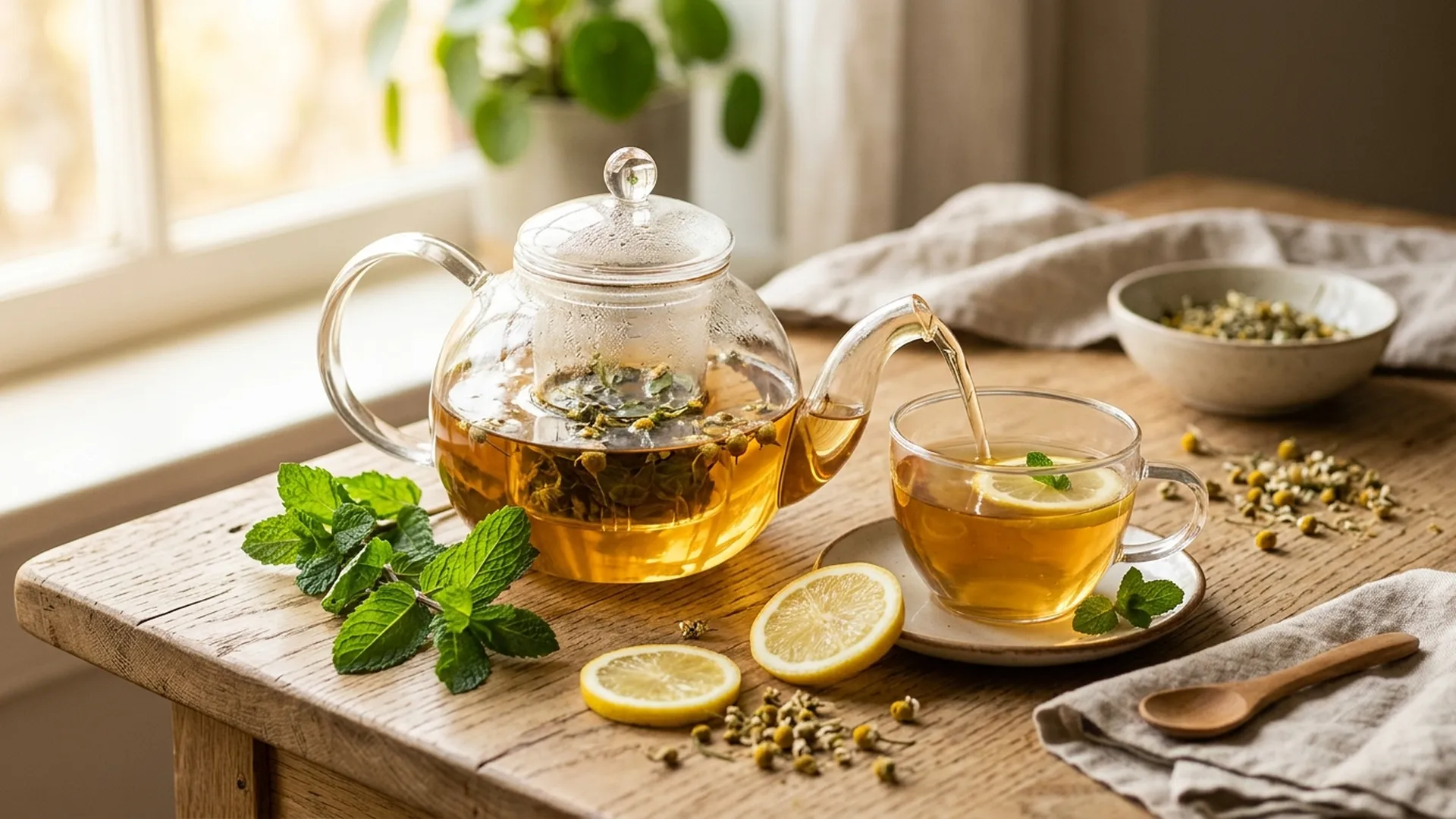
Making tea at home feels automatic — hot water, herb, wait — but the gap between an aromatic cup and a bitter, flat drink lives in small details: the temperature at which the water meets the herb, how long they stay together, and the ratio between the two. None of this requires special equipment, only a little attention.
This guide is about preparation, flavor, and storage. It is not about treating, curing, or replacing guidance from a health professional. If you have a medical condition, are pregnant or breastfeeding, take ongoing medication, or plan to offer tea to small children, talk to a doctor or pharmacist first — some herbs interact with medicines or are not recommended in certain phases of life.
Wellness is not diagnosis. Tea is a drink, not medicine. If you have a symptom that will not pass, seek care instead of waiting for tea to solve it.
Before you start
Keep the workflow simple: pick a clean, dry teapot, boil fresh water each time, and have a strainer ready. Old water reboiled several times tastes flat because it loses dissolved oxygen. A wide, low mug is nicer for aromatic teas than a tall thermal cup, which traps the aroma.
Choose the herb with a simple purpose
Before filling the cupboard, decide why you want that tea. For a relaxing end of afternoon, gentle herbs like chamomile, lemon balm, and lemon verbena tend to please. After a heavy meal, mint, fennel, and boldo are classics. To start the day with a bold aroma, think of cinnamon sticks, ginger, and cloves, alone or blended with leaf teas.
Prefer herbs with visible origin — farm name, packaging date, whole appearance. Very broken leaves, dull color, and a weak smell in the bag mean the herb has already lost most of its aroma. Buy small amounts and refill often, instead of stocking half a kilo that will age in the pantry.
Decide between fresh and dried herb
Both work, but they behave differently. Fresh herb holds more water inside, so you use a larger amount for the same flavor: a good rule is double, or even triple, the volume you would use of the dried version. The aroma is greener, more vegetal, and the tea tends to be more delicate.
Dried herb concentrates flavor. It is practical, keeps well, and travels easily. On the other hand, it ages: a chamomile that was intense six months ago may be flat now. Smell it before using. If there is no aroma in the bag, there will be none in the cup either.
Fresh herbs from your own pot are the easiest to get right. Harvest in the morning, when the essential oils are most present, rinse under running water, dry with a paper towel, and gently press with your hand to release aroma before putting them in the pot.
Get the water temperature right
This is the point that changes the result the most. Water that is too hot pulls out bitterness and burns the more fragile aromas; water that is too warm releases nothing. As a practical reference:
- Delicate leaves and flowers (chamomile, lemon balm, mint, lemon verbena, lavender): hot water, but not boiling. Turn off the kettle before the first big bubbles, or wait a minute after it boils.
- Firmer leaves (whole-leaf green tea, lemongrass): water around 80 °C, the kind that has not yet formed rising bubbles.
- Hard barks, roots, and seeds (ginger chunks, cinnamon sticks, fennel, cloves): here you can boil them for a few minutes — this is decoction — before straining.
Without a thermometer, use a simple trick: once it boils, turn it off, lift the lid of the kettle, and count thirty seconds. That is enough to leave the violent boiling point behind.
Adjust the water-to-herb ratio
The easiest reference to remember is one level teaspoon of dried herb for every 200 ml of water, roughly a standard cup. For fresh herb, double it: one tablespoon per cup.
If you are making a larger pot, count per cup rather than using one spoon “for the pot”. Large-leaf herbs, like mint in whole sprigs, take up more volume and may ask for a bit more. Cloves, cinnamon, and ginger are strong: start with less and add more next time, because pulling flavor out of a finished cup is impossible.
Control the steeping time
Overshooting the time is the most common mistake. After a certain point, the infusion stops extracting aroma and starts pulling tannins, which make the tea astringent and bitter. Practical guides by type:
- Chamomile, lemon balm, lemon verbena, lavender: 3 to 5 minutes.
- Mint and lemongrass: 4 to 6 minutes.
- Fennel and star anise: 5 to 7 minutes.
- Ginger, cinnamon, and cloves (decoction): 5 to 10 minutes of gentle boiling, then cover and rest for a few more minutes.
Cover the pot or cup while the herb is in contact with the water. The lid holds the aromatic oils that rise with the steam — without it, much of the aroma vanishes before you drink. When the time is up, remove the herb. Leaving it in the cup “just a bit longer” keeps extracting bitterness.
Serve and adjust flavor without masking it
Taste before sweetening. Many teas are better plain when well made, and sugar ends up covering the very reason you picked that herb. If you do want to sweeten, honey or coconut sugar pair with most infusions; a splash of lemon lifts mint and lemongrass, but clashes with chamomile.
For iced tea, brew at double the concentration and pour over ice cubes. Diluting with ice keeps the aroma. If you brew warm and let it sit for hours to cool, the flavor turns flat.
Store the herb and the brewed tea properly
Dried herbs like sealed glass jars, away from light, heat, and moisture. Do not leave the jar on top of the stove or near a window. Label with the name and the month you opened it, and sweep the cupboard every six months: whatever lost aroma goes to compost or to scent bathwater, not to the cup.
Fresh herbs keep for a few days in the fridge, wrapped in slightly damp paper towel inside a jar or vented bag.
Leftover brewed tea goes into a covered glass jar in the fridge, without the herb inside, and disappears the next day. Reheat gently, without letting it boil again.
Common mistakes that ruin the tea
- Boiling a delicate herb together with the water. It turns everything bitter and kills the aroma.
- Forgetting the infuser in the cup. Five minutes turn into twenty while you scroll your phone.
- Reusing yesterday’s herb. Wet and stored, it molds fast.
- Storing in a clear jar on a sunny counter. Light is what degrades aroma the most.
- Sweetening before tasting. You learn less about the herb and mask preparation flaws.
- Buying in large amounts “to make it last”. Idle herb loses half its value in a few months.
Closing the cup
Well-made tea is the sum of small choices: herb with live aroma, water at the right temperature, controlled time, covered pot, careful storage. Start with two or three favorite herbs, tune ratio and time to your taste, and expand the repertoire slowly.
Frequently asked questions
Can I boil the herb together with the water?
For leaves and flowers, no. Boiling them together burns the essential oils and makes the tea bitter. The right move is to turn off the water, let the temperature drop a bit, and then pour it over the herb. Only hard roots and barks stand up to boiling, a process called decoction.
Is tea in bags worse than loose-leaf tea?
It is not worse, it is different. Tea bags carry finely broken herb that releases flavor fast but also cools quickly and loses aroma during storage. With loose-leaf you control the ratio better and usually find more intact leaves with more preserved aroma.
Can I reuse the same herb for a second infusion?
You can, especially with whole-leaf herbs. The second infusion is softer, with a different flavor from the first. Do it on the same day and never keep the wet herb overnight, because it grows mold quickly.
How long can brewed tea stay in the fridge?
In a sealed glass jar, up to 24 hours refrigerated is reasonable for home use. After that, the aroma drops sharply and the drink may turn cloudy. If you plan to carry it to work, strain before storing so it does not keep extracting bitterness.
Informational content. For risky situations or technical, legal or medical doubts, talk to a professional.