 Step by Step Guide
 How to build a balanced meal plate for everyday life
A practical guide to assembling balanced meals using the plate method: half vegetables, a quarter protein and a quarter whole-grain carbohydrate, without turning into a rigid menu.
Updated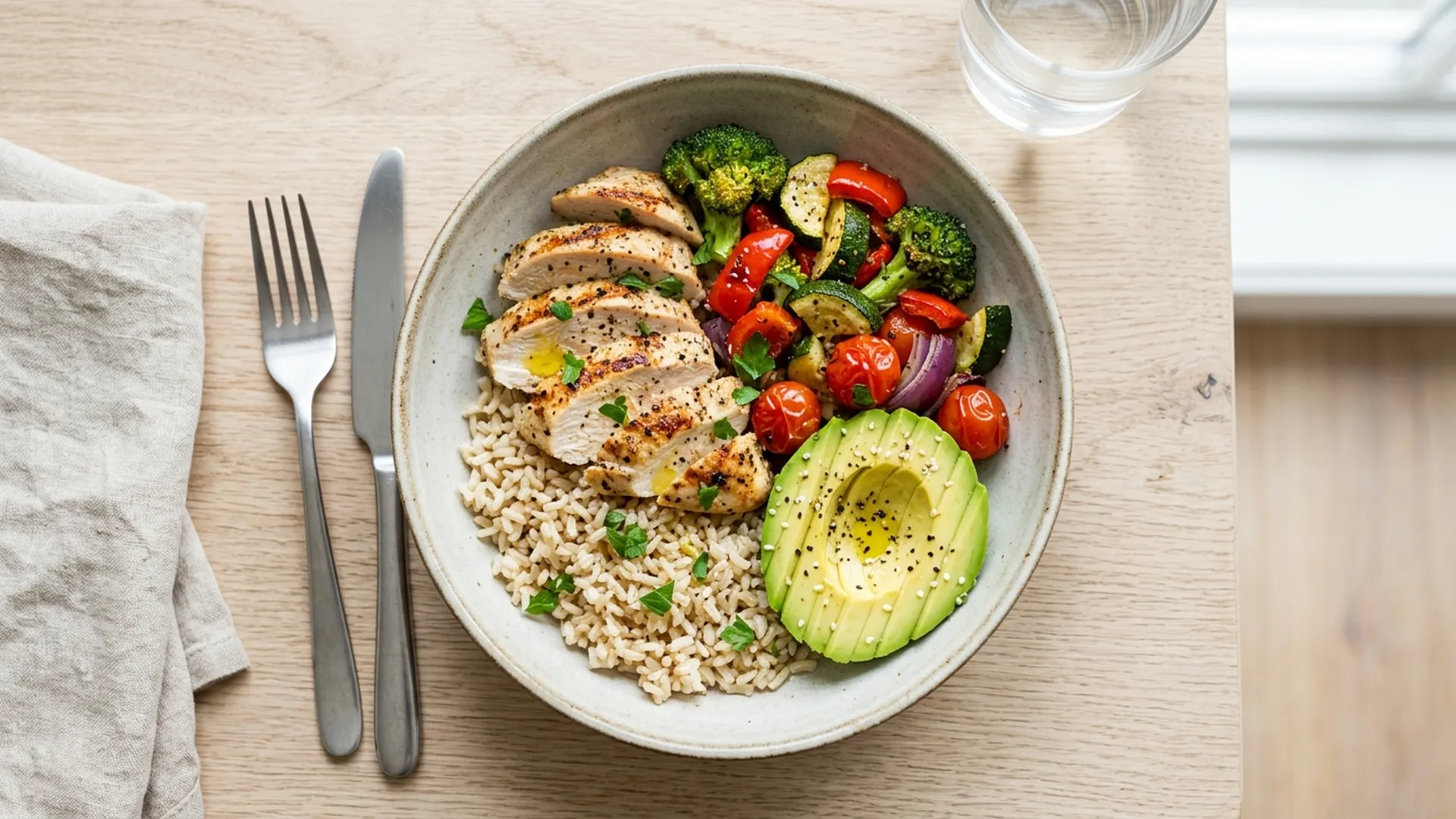
Building a balanced plate sounds like something only a nutritionist can do, but in practice it’s a visual decision you make before you serve. Most of the confusion doesn’t come from picking the right food, it comes from serving in the wrong proportions: lots of rice, little vegetables, and an almost decorative protein in the corner. When you flip that logic, the plate practically builds itself.
This guide uses the so-called plate method, a simple tool created to teach you to see the meal in three parts: half vegetables and greens, a quarter of protein and a quarter of carbohydrate, preferably whole grain. It’s not a diet, not a restriction and it doesn’t replace guidance from a professional. It’s just a way to organize what’s already on the table.
The intent here is to have a practical reference for daily life, not a fixed rule. Eating well is a routine, not a performance in a single meal.
Choose a plate of the right size
Start with the plate. A regular shallow plate, one of those 22 to 26 cm ones, is the ideal size for most adults. A plate that’s too big quietly nudges you into a bigger portion, and a plate that’s too small makes it feel like food is missing when the proportion is actually fine.
Leave the deep bowl for soups and broths, and the small dessert plate for, well, dessert. If you tend to go back for seconds, plate size matters less than the proportion inside it. Focus on the split, not on the rim.
Start with the vegetable half
Before anything else, serve the vegetables and greens first, filling half of the plate. Doing it in this order changes everything, because when you start with rice you leave only a small corner for the salad and it becomes decoration.
Raw, cooked, sautéed, grilled, roasted or steamed all work. Lettuce, tomato, carrot, beet, kale, broccoli, zucchini, eggplant, cabbage, cucumber, bell pepper. The more colorful, the more varied it tends to be in nutrients, and the more interesting it is to eat. Two or three different options already handle both looks and flavor.
Reserve a quarter for the protein
On the next quarter of the plate, place the protein. It can be beef, chicken, fish, eggs, or plant versions like beans, lentils, chickpeas, tofu and soy protein. A portion roughly the size of your palm usually covers an ordinary meal.
Prefer grilled, baked, boiled, stewed or lightly sautéed preparations. Fried foods can show up now and then, but they don’t have to be the rule. If you eat beans together with rice, the beans themselves already contribute a lot to the protein on the plate, even when there’s meat on the side.
Fill the last quarter with a carbohydrate
The final quarter belongs to the carbohydrate. Rice, pasta, potato, cassava, yam, sweet potato, corn, quinoa, couscous. When you can, choose whole-grain or less processed versions: brown rice, whole wheat pasta, potato with skin, real whole grain bread.
Whole grain isn’t mandatory and isn’t a synonym for boring food. It’s just that these versions tend to keep you full longer and come with more fiber. If you don’t enjoy pure whole grain, mixing half and half with the white version is already a good start until your palate adjusts.
Add a good fat in small amounts
Once the plate is assembled, finish with a drizzle of extra virgin olive oil over the salad, or a tablespoon of seeds, nuts or avocado on the side. Good fat isn’t the villain and it helps the meal feel tastier and more satisfying.
The point to watch is the amount: one tablespoon of olive oil, not half a cup. Ready-made sauces, industrial mayonnaise and very rich creams count toward the total and are often where a meal quietly goes off track.
Watch the sauces and ultra-processed extras
The plate can be technically balanced and still turn heavy if you drown everything in white sauce, cream cheese, ketchup, too much soy sauce or ready-made breaded items. These come with a lot of hidden sodium, sugar or fat, and they unbalance a meal that looked fine.
You can use them without drama, just as an accent and not as the base. A spoonful, not a puddle. Prefer fresh seasonings, herbs, lemon, garlic, onion, pepper and vinegar to add flavor without leaning on industrial sauces.
Drink something that doesn’t sabotage the meal
The drink at lunch often carries more sugar than dessert. Soda, boxed juice, heavily sweetened natural juice and bottled iced teas pack a lot of sugar into a regular glass.
Water is always the simplest option. If you want variety, sparkling water, water flavored with a slice of lemon or mint, unsweetened teas and small portions of unsweetened natural juice do the job. The drink is part of the plate, even if it sits beside it.
Keep the logic across the routine, not just one day
A balanced plate on Sunday doesn’t change much if the whole week runs on a different pattern. The plate method works because it’s easy to repeat: you look at the plate before starting, check whether the half has color, whether the protein is there, and whether the carbohydrate hasn’t taken over, then adjust.
You don’t need to hit 100% at every meal. If you can follow the proportion in most lunches and dinners of the week, you’re already doing consistent work. A pizza day, barbecue or birthday doesn’t tear down the routine, as long as the routine actually exists.
Common mistakes
- Serving the carbohydrate first. It takes over most of the plate and leaves a tiny corner for salad. Flip the order and start with vegetables.
- Treating salad as decoration. Two lettuce leaves and a slice of tomato don’t fill half the plate. Fill it for real.
- Thinking whole grain solves it alone. Swapping white rice for brown but still piling on three big spoons is still an excess of carbohydrate.
- Skipping protein at dinner. Many people build a balanced lunch and then eat only bread at night. It doesn’t have to be a steak, but some protein helps close the day.
- Drowning everything in sauce. A heavy sauce turns a good plate into something quite different from what it looked like. Use sparingly.
- Copying someone else’s diet. Needs vary with age, routine and health. The plate method is a general reference, not a personal plan.
To carry into your next meal
Next time you serve yourself, pause for two seconds and look at the empty plate as if it were already divided: half, one quarter, one quarter. Serve in this order: vegetables, protein, carbohydrate. That single move changes the face of the meal without demanding a new menu, expensive ingredients or an app.
If at some point you want to go beyond eyeballing it, or if you have a specific health condition, a conversation with a nutritionist personalizes all of this for your case. Until then, the plate method is an honest starting point to eat better without turning meals into a spreadsheet.
Frequently asked questions
Do I need to weigh food to get the proportions right?
No. The plate method exists precisely so you don't need a scale or an app. The idea is to look at the plate split into half, one quarter and one quarter, and adjust by eye. After a week or two of using it, your eye calibrates on its own.
What if I don't like raw salad?
The vegetable half can be cooked, sautéed, roasted, grilled or in soup. It doesn't have to be raw leaves. Grilled zucchini, steamed broccoli, roasted carrots and sautéed kale count just the same, and many people accept them better than lettuce.
Can I follow the plate method as a vegetarian?
Yes, and it fits naturally. The protein quarter can hold beans, lentils, chickpeas, tofu, eggs or soy protein. A tip is to combine a legume with the carbohydrate, like the classic rice and beans, which already handles a good part of the plate's protein.
Does dinner have to look like lunch?
Not really. At night many people prefer lighter meals like soup, an omelette with salad or a well-made sandwich. The plate method works as a reference when you want a complete meal, not as a rule for every bite of the day.
Informational content. For risky situations or technical, legal or medical doubts, talk to a professional.