 Step by Step Guide
 How to build a healthy breakfast for everyday life
A practical guide to building a breakfast that actually holds you over by combining protein, fiber and a good fat, with fast weekday options and what you can prep the night before.
Updated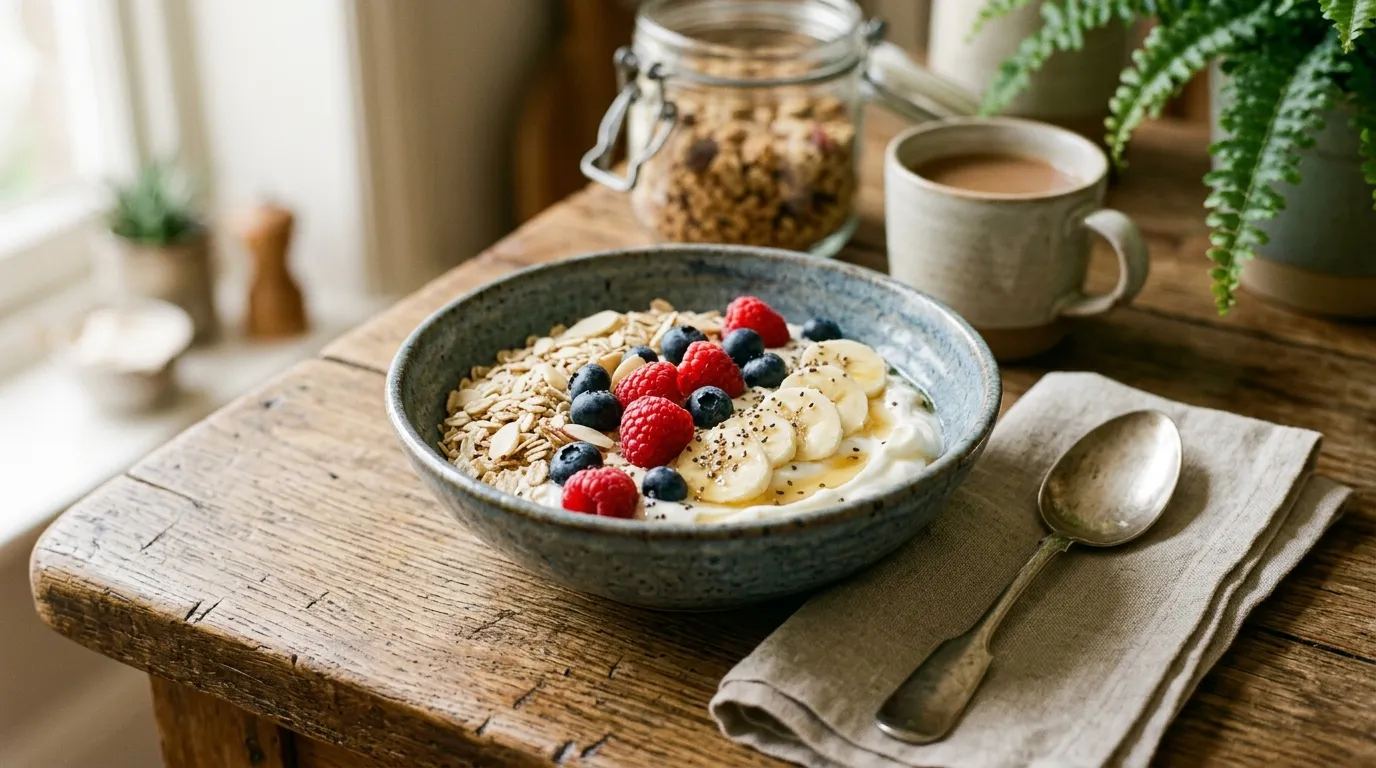
Breakfast carries the reputation of being the most important meal of the day, and that reputation produces two opposite mistakes: people who swallow anything in a rush, and people who skip it without thinking. In practice, breakfast doesn’t need to be big or elaborate. It needs to hold you until the next meal, and that depends far less on the clock than on the combination that lands on the plate.
This guide uses one simple assembly rule: protein + fiber + a good fat. It’s not a diet, there’s no calorie counting, and it isn’t guidance for any specific health condition. It’s just a way to organize what’s already in your kitchen so the morning doesn’t fall apart by ten o’clock.
The idea is to have an assembly skeleton that survives a rushed weekday, not a menu to follow to the letter.
Understand the combination that holds the morning
Before picking a recipe, understand the pattern. A breakfast that “doesn’t hold” almost always looks the same: lots of refined carbohydrate, almost no protein and no fat at all. A white roll with sweetened coffee, cookies, sugary cereal, boxed juice.
The fix is combining three pieces on the same plate. Protein gives longer-lasting fullness, fiber slows digestion down, and a good fat makes the meal tastier and steadier. None of it has to be expensive or unusual: an egg, a piece of fruit and a handful of nuts already cover all three.
Start by choosing the protein
Pick the protein first, because it’s the piece most people forget. Eggs scrambled, boiled or fried in a little oil are the most versatile and cheapest option. Plain yogurt, fresh cheese, milk, cottage cheese, tofu, shredded leftover chicken and even a spoon of peanut butter all count.
A practical reference for an adult: one or two eggs, a small pot of yogurt, or a generous slice of cheese. If your breakfast today is only bread and coffee, adding a protein is the single change that usually solves half the problem.
Put fiber where the sugar used to be
Fiber is what trades an energy spike for something steadier. Whole fruit is the easiest route: banana, papaya, apple, orange, strawberries, whatever is good and cheap this week.
Beyond fruit, rolled oats, real whole-grain bread, a filled tapioca crepe, corn couscous and even vegetables work — think tomato in your scrambled eggs. You don’t need all of them, one item is enough. The goal is simple: if the plate has some fiber, it stops being just white flour with sugar.
Finish with a small amount of good fat
The third piece is fat, and it’s small. A spoon of peanut butter, a handful of nuts or walnuts, a few slices of avocado, a spoon of chia or flaxseed, or a drizzle of olive oil on the eggs. It’s what makes breakfast feel “complete” without adding much volume.
Watch the amount, because that’s where things quietly go sideways: one spoon of peanut butter, not half the jar. The shorter the ingredient list, the better.
Keep two or three fast weekday builds
A weekday morning is no time for creativity. Choose two or three combinations you can assemble in ten minutes and repeat them without guilt. A few examples that follow the three-piece rule:
- Scrambled eggs + whole-grain bread + half an avocado.
- Plain yogurt + sliced banana + oats + nuts.
- Tapioca or a wrap with cheese + papaya + a spoon of chia.
- Couscous with egg + tomato + a drizzle of olive oil.
- Whole-grain toast with peanut butter + apple + a glass of milk.
Repeating isn’t a lack of variety, it’s what makes the habit survive a busy Tuesday.
Prep part of it the night before
What gets in the way of breakfast usually isn’t willingness, it’s the clock. Spending five minutes the night before changes the morning outcome. Leave boiled eggs in the fridge, oats soaking in yogurt in a jar with a lid, fruit washed and cut, nuts portioned into small bags.
If you eat out or at work, build the closed jar the night before and take it with you. A decision made at night is a decision you don’t have to make half-asleep in the morning.
Watch for hidden sugar and ultra-processed food
Most of the morning’s sugar doesn’t come from dessert, it comes from things that look harmless: colorful breakfast cereal, sweetened granola, fruit yogurt with syrup, chocolate drink powder, filled cookies, boxed juice, very sweet sandwich bread. Added up, they make the start of the day much sweeter than it seems.
You don’t need prohibition, you need swaps: plain yogurt with chopped fruit instead of sweetened yogurt, unsweetened granola or plain oats, cocoa powder instead of chocolate powder, fruit instead of juice. And your coffee or tea, gradually, with less sugar until you taste it again.
Adapt it if you’re not hungry in the morning
If you wake up with no appetite, forcing a full plate rarely works. Start small: a yogurt, a piece of fruit with nuts, one egg. A smaller but complete meal works better than nothing followed by uncontrolled hunger mid-morning.
Another way out is shifting the time. Having coffee at home and eating properly two hours later at work is a legitimate choice, as long as the meal exists and follows the same three-piece logic. And if the lack of appetite comes with other symptoms or bothers you, that’s a conversation for a nutritionist or doctor, not for a guide.
Common mistakes
- A breakfast made only of carbohydrate. Bread with sweetened coffee doesn’t hold long. The missing piece is protein.
- Swapping fruit for juice. Juice, even fresh, has less fiber and passes faster. Whole fruit goes further.
- Trusting a “fit” or “natural” label. Granola, bars and functional yogurt can carry plenty of sugar. Read the ingredient list.
- Overdoing the good fat. Nuts and peanut butter are great by the handful and the spoon, not by the jar.
- Leaving every decision to the morning. With nothing ready, the rush picks the ultra-processed option for you.
- Copying someone else’s breakfast. Routine, taste and needs vary. The three-piece rule is a general reference, not a personal plan.
To carry into tomorrow morning
Before you go to bed tonight, pick one of the builds from the list and get what you can ready: a boiled egg, a jar of oats with yogurt, washed fruit. Tomorrow, while assembling, run a two-second check: is there protein, is there fiber, is there a small amount of good fat? If yes, it’s done.
A good breakfast isn’t the prettiest or the most complete one, it’s the one you can repeat all week without heroic effort. If you have a health condition, a dietary restriction or a specific question, a nutritionist can tailor all of this to your case. Until then, the three-piece rule is an honest place to start.
Frequently asked questions
Do I have to eat breakfast every day?
There is no universal rule. Some people wake up hungry and function better eating early, and others prefer to eat later. What counts is the day as a whole. If you do eat in the morning, it is worth making it count with a combination that holds you until the next meal.
Is bread allowed at breakfast?
Yes. The point is not to cut the bread, it is what goes with it. Bread alone with sweetened coffee keeps you full for a short while. The same bread with egg, cheese or peanut butter becomes a very different meal, especially if it is real whole-grain bread.
What does the vegetarian version look like?
It is simple. Eggs, yogurt and cheese already cover it if you eat dairy. With no animal products at all, you can use scrambled tofu, peanut butter, hummus, seeds, oats with fortified plant milk, and even leftover beans or lentils from dinner.
Does a fruit smoothie count as breakfast?
It does, as long as it is not just fruit and sugar. Blended with yogurt or milk, a spoon of oats and a spoon of peanut butter, it gains protein, fiber and a good fat and stops being a sweet glass that passes quickly.
Informational content. For risky situations or technical, legal or medical doubts, talk to a professional.