 Step by Step Guide
 How to drink more water every day and make it a habit
A simple way to drink more water without relying on memory: a glass on waking, the bottle in sight, routine triggers, natural flavor from fruit and herbs, and how to notice the signs of drinking too little.
Updated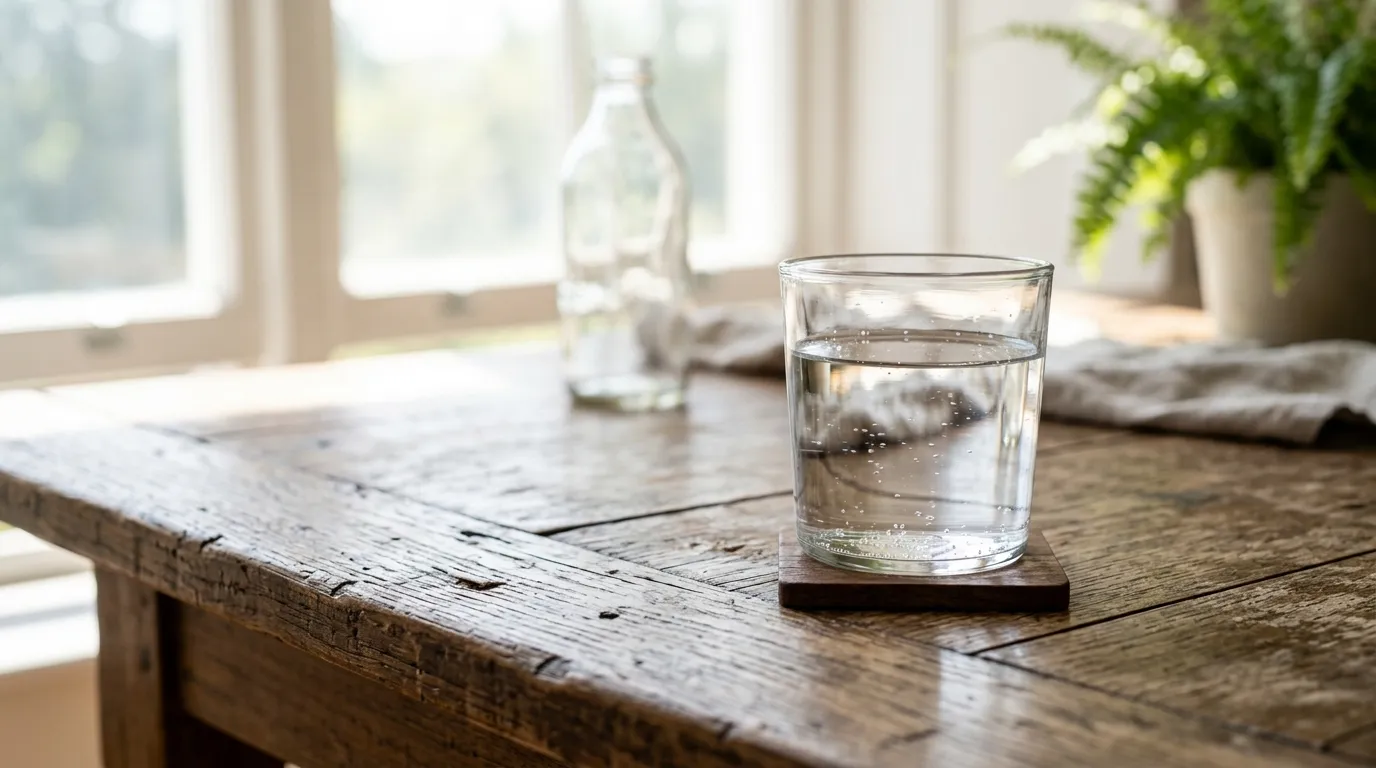
Drinking more water looks like the simplest health goal in the world — and that’s exactly why it fails. Water gives no immediate pleasure, has no taste that calls out to you, and nobody goes looking for it mid-afternoon. Most people decide “I’m going to drink more water” on Monday and forget by Wednesday. But staying well hydrated doesn’t depend on willpower: it depends on setting up your space so your body remembers for you.
This guide doesn’t tell you how many liters to drink. Your need for water varies from person to person, with the climate, what you eat and how much you move. What it offers is a way to build the habit without being a prisoner of memory — using a bottle in sight, the triggers you already have and a few natural flavor tricks. Within a week, the habit starts repeating on its own.
This guide is about building a healthy habit, not treating or preventing disease. If you have a condition that changes how much you can drink, such as kidney or heart problems, talk to a doctor about the right amount for you. The goal here is simply to stop forgetting.
Start with a glass on waking
Your body goes the whole night without water, so waking up is the best moment for the first sip. Leave a glass of water on your bedside table the night before and drink it before you pick up your phone or make coffee. It’s a small action, but it opens the day with a win already banked.
A 200 ml glass on waking pulls you out of starting the day too dry. Over time, that first sip stops being an effort and becomes part of the morning, like brushing your teeth. Since the glass is already there, the urge to drink comes along with the habit, not against it.
Keep the bottle always in sight
“Out of sight, out of mind” applies perfectly to water. If the bottle is in your bag, in the cupboard or in another room, your brain simply forgets to drink. The most effective rule in this guide fits in one sentence: the bottle stays where you are.
At home, pick a fixed spot on your desk or the kitchen counter. Out and about, carry the bottle in your bag, backpack or car. The goal is for the water to be within a meter of you for most of the day. You don’t have to remember — you just bump into it without thinking.
Hook the glass onto triggers that already exist
A new habit sticks far more easily to one you already have. Instead of deciding “drink water every hour,” tie each sip to a moment that already happens: a glass on waking, one with each meal, one when you sit down to work, one after your shower.
Pick three or four fixed triggers — you don’t need to cover the whole day. Just “a glass before each meal” guarantees at least three through the day with little effort. Since those moments already exist, you don’t depend on willpower or mood: the trigger pulls the action, and the action becomes routine.
Refill the bottle at set times
A bottle always full in the same spot is a recipe for staying full. Water only shows up when there’s a reason to pick it up. Turn refilling into a timed ritual: fill the bottle on waking, after lunch and in the middle of the afternoon.
With each refill, drink half the glass before going back to your desk. That combines the act of filling with a guaranteed sip, more than once a day. If you filled it in the morning and it’s almost empty by the end of the afternoon, you’re on the right pace. The bottle marks your progress instead of waiting on your memory.
Vary the flavor with fruit and herbs
Plain water tires the palate of anyone not used to it. To avoid falling back on soda or sugary juice, give the water a natural flavor. Lemon, orange or cucumber slices, mint leaves, thin ginger or some berries give the water a little taste, with almost no calories.
Let the flavored water sit in the fridge a few minutes before drinking — tastier and more refreshing. If you prefer, use an infuser in the bottle so you don’t swallow the pieces. Natural flavor is the shortcut to drinking without guilt or sugar, and you’ll pick it up by want rather than duty.
Track without becoming obsessed
Using the bottle as a marker is great; turning hydration into a spreadsheet is not. Counting every sip, timing each one or chasing an exact volume every hour becomes another source of stress — and a habit that stresses you doesn’t last. The goal is to stay hydrated, not to hit a number.
A light way to follow it: just pay attention to what the bottle shows over the day. If it emptied two or three times by late afternoon, you’re doing well. The rest is fine-tuning that comes with practice. Don’t let control take the place of the habit.
Notice the signs of drinking too little
You don’t need to measure anything to notice when you’re drinking too little. Your body warns you. A dry, sticky mouth, thirst that shows up mid-afternoon, dark or strong-smelling urine, a mild headache, unusual tiredness and dry skin are the most common signals.
These signs aren’t a rule and they vary from person to person, but they work as a thermometer. Felt two or three together? Adjust the plan: have a glass at the next break. It’s best to treat your body like a dashboard, not a ruler — what counts is paying attention.
Overcome the most common obstacles
The biggest enemies of a glass of water are well known: forgetfulness, rush, laziness about getting up to fill it, and the habit of only remembering when thirst strikes. Each has a simple fix. Forget? Bottle in sight. Don’t want to get up? Keep the bottle, not the glass. Only remember with thirst? Use the triggers from step three.
Another obstacle is thinking water is boring or doesn’t count. Cold, sparkling or unsweetened tea all add to the daily total. And don’t down a lot at once: your body puts the same volume to better use spread across the day.
Common mistakes that derail the habit
- Drinking it all at once to make up for the day. The body uses the same volume better spread across the day.
- Waiting for thirst to show up. Thirst often arrives late; use the triggers, not the passing urge.
- Trusting only your memory. A bottle in sight beats any mental reminder.
- Replacing water with soda and juice as if they counted the same. Sugar and caffeine change the total.
- Giving up after the first bad day. A habit is built on repetition, not perfection.
- Turning hydration into an obsession. Following the marker is good; controlling every sip, no.
Have a glass now, long before you feel thirsty. The hard part isn’t the water — it’s remembering. Start small, start simple, and before long drinking water becomes just another habit in your day.
Frequently asked questions
How many liters of water should I drink a day?
There is no single number. Your need varies with weight, climate, food and activity. A good starting point is to watch the color of your urine and whether you feel thirsty through the day, adjusting the amount until you feel well.
Does drinking water near meals bother digestion?
Drinking a glass in moderation before or after eating doesn't bother it. Avoid filling your stomach with water right at the meal if that causes discomfort. The habit doesn't need to become a race against the clock.
Do coffee and tea count as water?
In part, yes. Caffeinated drinks have a mild diuretic effect, but they still add to your total. The best approach is to get most of your volume from plain water or water with natural flavor, without sugar.
I feel like I drink little, but I never feel thirsty. What do I do?
Thirst often arrives late. Instead of waiting for it, use your day's triggers, a glass on waking, one with each meal and one at every break. A bottle in sight turns that into a habit.
Informational content. For risky situations or technical, legal or medical doubts, talk to a professional.