 Step by Step Guide
 How to change your car's oil yourself, safely
The step-by-step guide to changing your engine oil at home: the tools, how to drain the old oil, swap the filter, pick the right grade and amount, and dispose of it cleanly.
Updated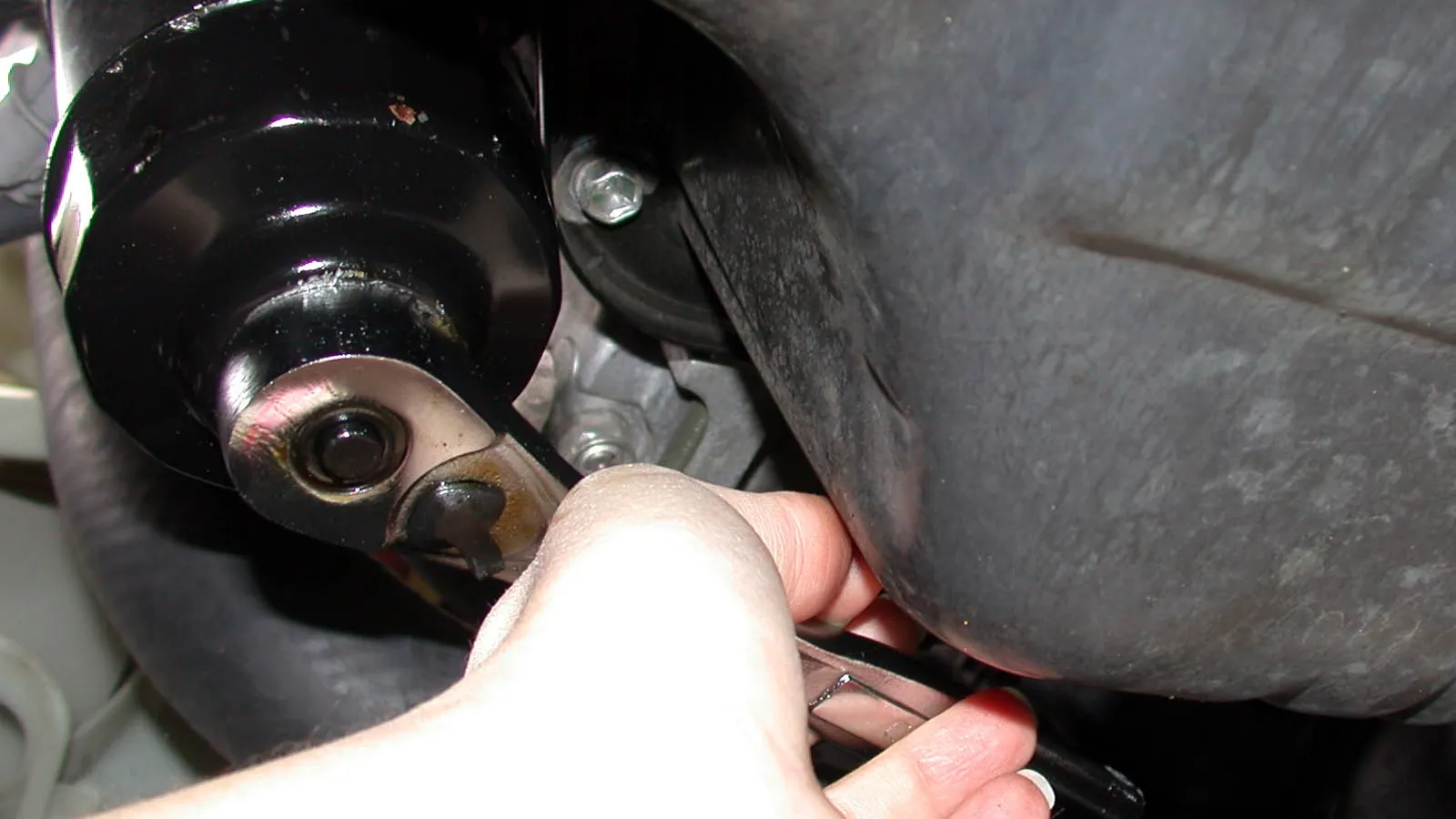
Changing your car’s oil is one of the simplest maintenance jobs you can do at home, and one of the most important: it’s what decides how long the engine lasts. The oil lubricates, cleans, and cools the moving parts; once it ages and thickens, wear climbs and what should be a 45-minute job turns into a worn-out engine.
This guide covers ordinary passenger cars with a combustion engine — gasoline, ethanol, or diesel. The procedure is basically the same, but the details — where the drain plug sits, the oil grade, the type of filter — change from one model to the next. So rule number one is: follow the manual, not your memory. If your car uses a drain-plug or filter gasket, buy that alongside the oil.
Safety first: you’ll be dealing with hot oil and a raised car. Let the engine cool down enough and, if you’re using a jack, set the car on jack stands before putting any part of your body underneath. Hot oil burns skin in seconds.
Before you start
Buy the oil and filter using the manual: the grade is stamped on the oil cap, but the quantity and the specification (the standard, like A5/B5 or API SN) need checking in the manual. Also confirm the drain-plug tool, because some models take a different size than the filter wrench.
- New oil in the grade, quantity, and specification from the manual (buy about 10% extra for topping up)
- New filter and, if your car uses one, the drain-plug gasket
- A drain pan that holds more than the sump capacity
- Ramps, or a jack with jack stands (never just the jack)
- Drain-plug wrench and filter wrench
- Funnel, rags, gloves, and a sheet of cardboard or tarp to protect the floor
Set up the car and warm the engine
With the engine cold or lukewarm, start it for 2 or 3 minutes just so the oil flows more easily — but don’t let it boil, because hot oil burns. Meanwhile, set up the safety basics: pull the parking brake, put a manual in first gear (or an automatic in Park), and shut the engine off.
Raise and safely support the car
If you have ramps, that’s the easiest route: drive up slowly and chock the wheels that stay on the ground. With a jack, lift one side and set it on a jack stand before anything else — the jack only lifts, it doesn’t hold. Never work on a car supported only by the jack.
Locate the drain plug and the filter
The drain plug is at the lowest point of the oil pan, usually a socket-head or 13 mm bolt. The filter is normally on the side of the block; in some cars it’s reached from underneath, in others it needs the proper filter wrench. Check the manual to find both on your model.
Drain the old oil
Put the drain pan under the plug and, with the wrench, turn the bolt counterclockwise to loosen it. When it’s nearly free, grab it with a gloved hand so it doesn’t drop into the pan, then remove it fully. The oil comes out in a rush: pull your hand away and let it drain until it becomes a thin trickle, level the car on the ground and wait for the dripping to stop.
While it drains, clean the plug, check the gasket, and replace it if it’s a single-use one.
Change the oil filter
With the pan still underneath, loosen the filter counterclockwise using the wrench. A well-tightened filter breaks free with more force; if it won’t budge, use the leverage of the wrench handle, but don’t lean your body under the car. Coat the rubber gasket of the new filter with a thin film of oil, thread it on by hand and tighten it firmly — no more than that.
Refill with the grade and amount from the manual
Thread the plug back in and tighten it firmly, to a moderate torque — you don’t need shop-level force. Use the funnel to pour about 90% of the volume listed in the manual; you’ll finish the rest at the check. Close the oil cap, start the engine, let it idle for about 20 seconds, then shut it off: that circulates the oil through the filter and the whole engine before the first reading.
Check the level with the car on the ground
Lower the car, wait about 2 minutes for the oil to settle, pull the dipstick, wipe it with a rag, insert it all the way and pull it out again. The level should sit between the min and max marks, preferably close to max but never above it. If it’s low, top it up a little at a time and re-check, because it’s easy to overshoot.
Dispose of it properly and check for leaks
With the car on the ground, wipe up any spills and confirm that the plug and filter are dry. Take a short drive of a few kilometres and, with the engine cold, look under the car for oil spots — if you see any, the seal isn’t holding, and you need to re-tighten it gently. Used oil is highly polluting: never pour it down a drain, into the street, or on the ground. Put the oil and filter in a sealed container and take them to a collection point, which is required to accept them.
Common mistakes that cost money
- Filling the engine without knowing the manual’s capacity. You add, then have to drain some out to fix it.
- Over-tightening. A stripped thread on the plug or filter means replacing the part, which costs more than a careful torque.
- Wrong filter size or specification. A poor filter may not filter properly or restrict oil flow.
- Forgetting the drain-plug gasket. Without the gasket, the plug leaks.
- Throwing the old oil in the regular trash. It’s polluting and usually illegal — use a collection point.
- Letting the next change slip. The oil loses viscosity, turns to sludge, and the whole engine suffers; write down the date and mileage.
After the change
Note the mileage and date of the change on the windshield sticker or in your phone. Drive a few kilometres and re-check the dipstick with the engine cold. If you spot an oil patch on the floor, go back and snug the plug or filter, gently. Finally, keep your owner’s manual somewhere handy: each model has its own points, grade, and amount, and having it close by prevents your next change from going wrong.
Frequently asked questions
How often should I change the oil?
The interval comes from your owner's manual and the oil type. Most synthetic oil lasts 8,000 to 12,000 km, while conventional oil usually wants a change every 5,000 km or 6 months. Since every manufacturer sets its own limit and severe use (heavy traffic, dust, frequent hard acceleration) shortens it, trust the manual before you trust any label.
Can I mix different oil grades?
Try to avoid it. Each oil has its own additive package and specification, and mixing can reduce engine protection. If you need to top up at the pump, use the same grade already in the engine; if you don't know, top up with a little of the grade from the manual and do a full change as soon as you can.
What if I overfill the oil?
Going above the max mark is bad too — the excess gets whipped and foamed by the crankshaft, leaks past the seals, and can even get burned. If you went over, don't drive with it too full; drain a little or have a shop adjust it before you head off.
What do I do with the old oil?
Never pour it down a drain, into the street, or on the ground — it's highly polluting and illegal to dump in many places. Store it in a sealed container and take it to a collection point such as a gas station, a parts store, or a recycling center, which are often required to accept used oil. Hand over the filter and oil-soaked rags with it.
Informational content. For risky situations or technical, legal or medical doubts, talk to a professional.