 Step by Step Guide
 How to remove grease stains from clothes, even after washing and drying
A step-by-step method to remove oil and grease stains from regular and delicate fabrics, including when the garment has already been through the washer and dryer and the stain "disappeared and came back".
Updated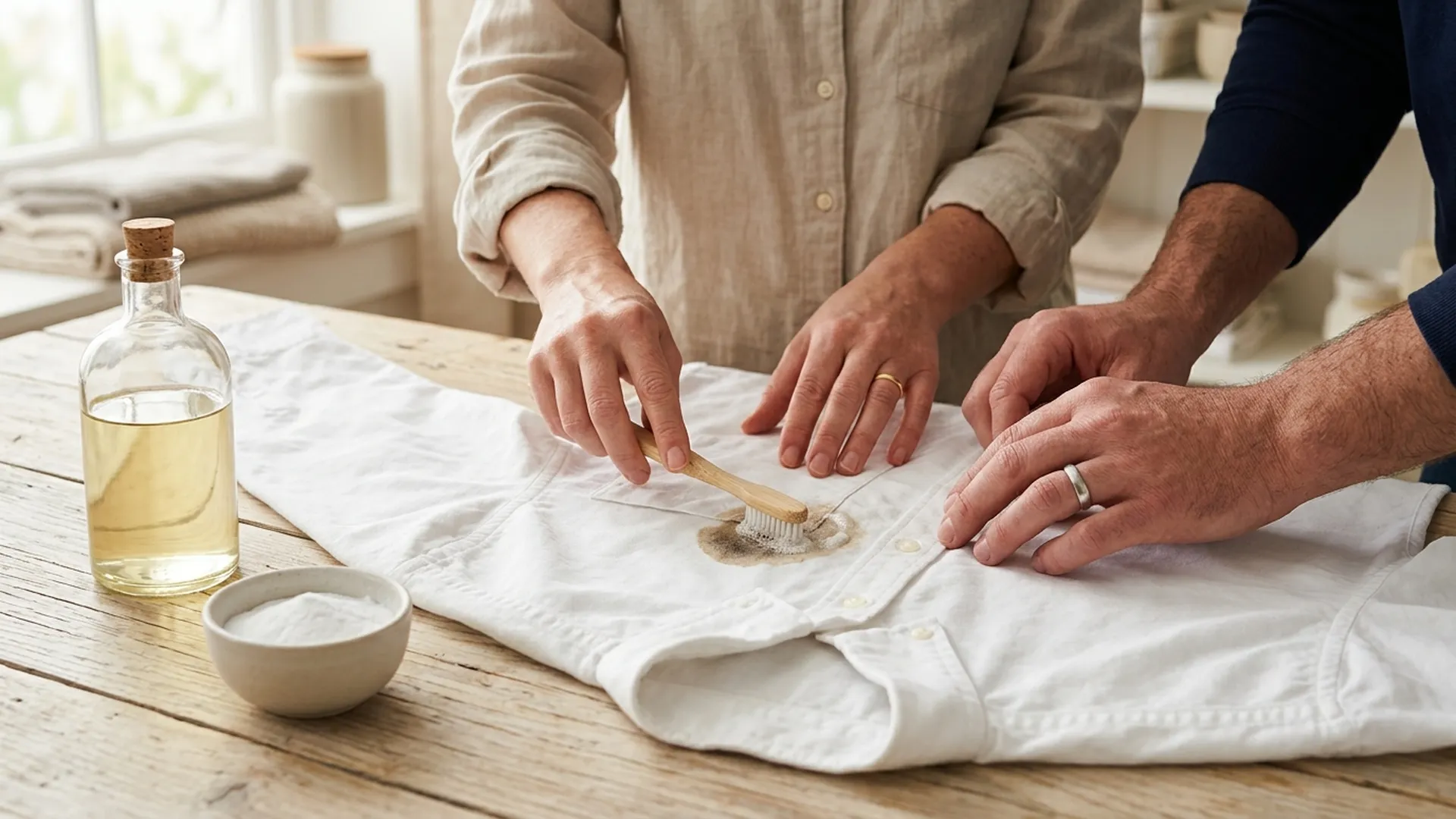
Grease stains are treacherous because you often don’t notice them right away: a drop of olive oil at dinner, a splash of bacon fat, brushing against a greasy bike chain. The piece goes into the hamper, gets washed normally, and only after it dries does the mark appear — that light, slightly yellow shadow, exactly where the splash landed.
This guide is for everyday clothing, both sturdy fabrics (cotton, denim, blends) and delicate ones (silk, viscose, wool, fine synthetics). The method shifts a little between them, and above all, what you must not do changes — and that is the part that ruins the garment permanently.
Golden rule: never put a garment with a visible grease stain in the dryer or iron it. Heat locks the grease into the fiber, and from that point on the odds of getting it out drop sharply.
Before you start
Work in a well-lit spot, preferably daylight. A grease stain on white cloth is easy to see, but on dark clothing you often only notice it by wetting the fabric — drip a bit of water on the suspicious area and look at it against the light.
- Neutral dish soap (the clear or light-green kind, without bleach)
- Cornstarch, talcum powder or baking soda
- Soft toothbrush
- White cotton cloth without prints
- Warm water, not boiling
Identify the fabric and test first
Check the care label before anything else. Cotton, denim and standard polyester tolerate light rubbing and warm water. Silk, wool, viscose, satin and structured pieces (blazers, formal dresses) do not tolerate scrubbing, and concentrated dish soap can leave marks.
Do a quick test: dip a cotton swab in diluted dish soap and dab a hidden corner of the garment — inner hem, seam allowance. Wait a minute and check if any color came off on the swab. If it did, stop and take it to a cleaner.
Absorb the excess, if the stain is fresh
If the stain just happened, before any liquid, cover it generously with cornstarch, talc or baking soda and let it sit for 15 to 30 minutes. The powder pulls grease out of the fiber and forms a slightly damp crust.
Then scrape it off with a butter knife or the edge of a plastic card, without pressing into the fabric, and shake off the rest. This step alone solves a lot of stains before you even wet the piece. If the stain is old and has already been washed, skip to the next step.
Pre-treat with dish soap
Dish soap is designed to break down grease, so it works better than laundry detergent for this kind of stain. Put a small amount — coin-sized — directly on the dry stain, without wetting first.
Spread it in gentle circular motions with your finger and let it sit for 10 to 15 minutes. You will see the fabric darken in the stained area; that is the soap penetrating, and it is normal.
Brush with a soft brush, along the fiber
On sturdy fabric, use a soft toothbrush with short strokes, always in the same direction, never in tight circles. Aggressive circular motion twists the fibers and creates that fuzzy, worn look even on a brand-new piece.
On delicate fabric, skip the brush: use only your fingertips or a folded white cloth, pressing gently so the soap can work. If you notice the fabric starting to pill or fray, stop immediately.
Rinse with warm water from the back of the fabric
Rinse the stain from the back side, letting the water flow through the fiber and push the grease outward, instead of driving it deeper in. Warm water, never too hot, and a firm but thin stream, like a faucet half open.
If you still see a shadow when you hold the wet fabric up to the light, repeat steps 3 and 4 once more. Two passes usually solve it; three, sometimes. Beyond that, the problem is something else (oxidized stain or fabric actually dyed by the oil).
Wash the garment normally, without the dryer
Run it through the wash as you normally would, with your usual detergent. If the piece is dark or delicate, use the delicate cycle and cold water; if it’s white cotton, warm water helps.
Do not use the dryer and do not iron until you are sure the stain is gone. Lay the piece flat in the shade or hang it in a ventilated spot, and only when it is dry check it against the light to see if the shadow has vanished. If it came back, redo the pre-treatment before any heat.
For delicate pieces or old stains, use a cornstarch paste
Silk, wool or a tailored pair of trousers calls for a gentler approach. Mix a tablespoon of cornstarch with a few drops of water until you get a thick paste, and spread it covering the stain.
Let it dry completely — a few hours or overnight — and brush off with a soft brush. The dry starch carries a good part of the grease with it, without stressing the fiber. After that, if a shadow still remains, take the piece to a specialty cleaner instead of pushing harder chemicals at home.
Common mistakes
- Pouring hot water directly, especially on synthetics or printed pieces: it sets the grease and sometimes wrinkles the fabric permanently.
- Ironing or using the dryer while the stain is still visible. Heat + grease = permanent mark.
- Mixing products (dish soap + bleach, ammonia + bleach). Beyond being toxic, many combinations ruin the color of the garment.
- Scrubbing hard in circles on delicate fabric. It pulls threads, creates a shiny patch and sometimes leaves a lighter “halo” around the spot.
- Using pure bleach hoping to “burn” the grease off. It strips the color before removing the grease, and you end up with a white mark instead.
- Giving up after a single try. Old grease stains usually need two or three treatment cycles; between them, let the piece air-dry, no heat.
When to give up and take it to a cleaner
If the piece is pure silk, cashmere, leather, suede or has a structured lining (blazer, formal dress, coat), take it straight to a specialty cleaner and tell them it is grease. They have specific solvents that work from behind the fabric without wetting the visible face, which is impossible to reproduce at home.
It also makes sense to outsource when the stain is old and you have already tried once without success: every extra attempt sets the oil a bit more. Better to pay a professional than to lose the whole garment.
Frequently asked questions
Why does the grease stain come back after washing?
Because grease penetrates the fibers and the washer only removes what sits on the surface. When the garment dries, the oil trapped inside the yarn migrates outward again, forming that yellowish shadow. It only comes out by treating the spot directly before running the piece through the machine again.
Does hot water help or hurt?
It helps on sturdy natural fibers like cotton T-shirts and jeans, because it dissolves grease better. It hurts on synthetics, silk, wool and anything with a rubbery print, because it can "cook" the stain or damage the fabric. When in doubt, use warm water.
Can I use a commercial stain remover directly?
You can, but test first on a hidden area like the inner hem, because many removers lighten color. And never mix stain remover with bleach or ammonia on the same cloth — the reaction releases toxic gas.
Is it worth trying an old stain on a garment stored for months?
It is, but with realistic expectations. Old grease oxidizes and darkens, and sometimes it only comes out partially. If the piece is expensive or made of delicate fabric, consider a specialty dry cleaner instead of insisting at home and risking setting the stain for good.
Informational content. For risky situations or technical, legal or medical doubts, talk to a professional.