 Step by Step Guide
 How to unclog a sink without harsh chemicals
A step-by-step way to unclog a kitchen or bathroom sink using hot water, baking soda, vinegar, and a plunger, without damaging your pipes or breathing fumes.
Updated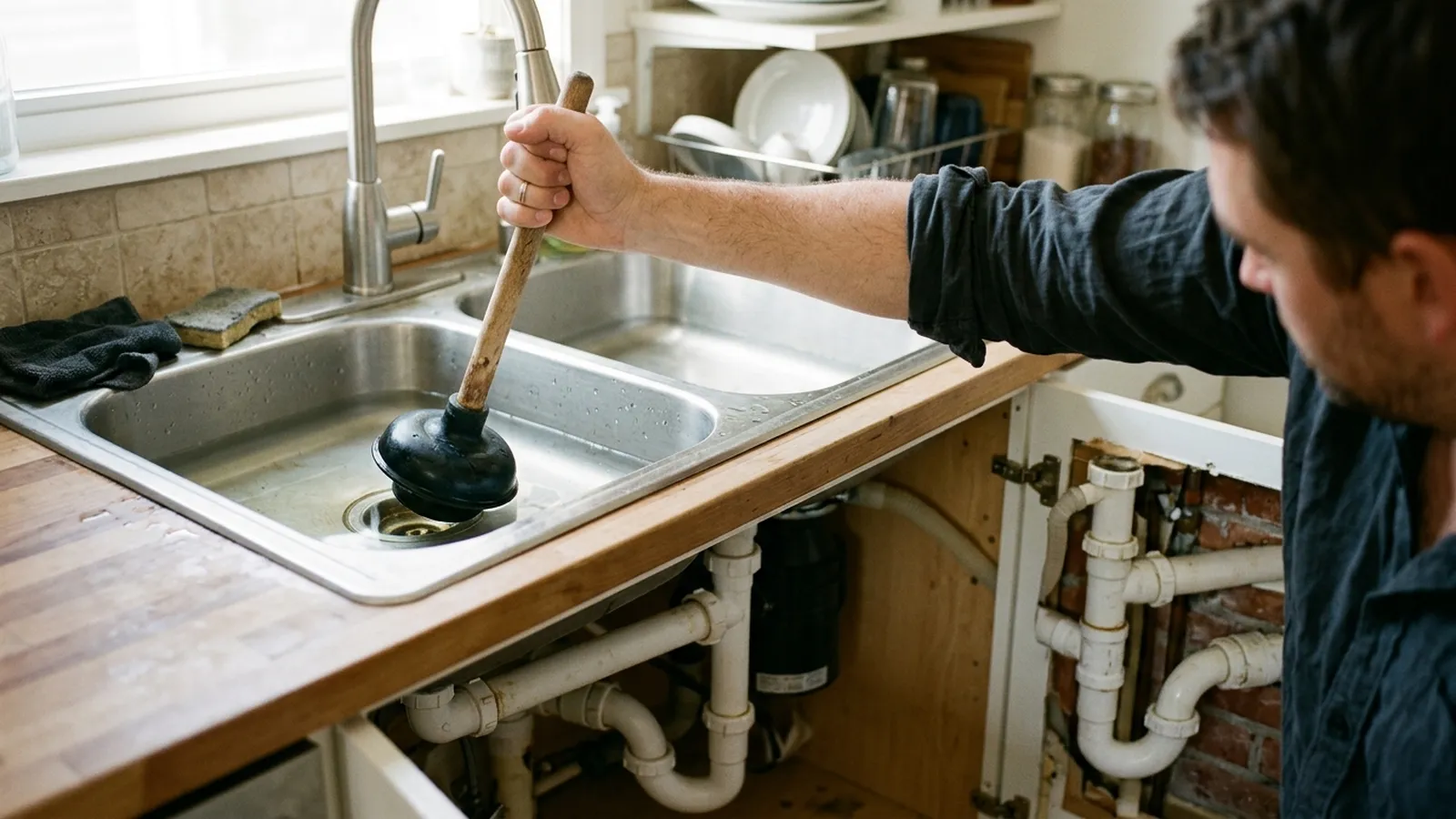
A sink that will not drain is the kind of thing that seems minor until it becomes a problem: the water rises in the basin, the dishes pile up and the kitchen stops. The good news is that most clogged sinks, especially in the kitchen, have one of two simple causes — accumulated grease and leftover food that sets into a sticky paste inside the pipe.
The fix, in most cases, is not a harsh product but an order: start with hot water, then baking soda and vinegar, and only if it still will not drain move on to a plunger and to cleaning the bend under the sink. This guide works for both a kitchen and a bathroom sink, and you probably already have everything you need in your cupboards.
Be careful with chemicals: avoid caustic soda, acid-based drain cleaners and any product you might mix such as bleach with other cleaners. These not only risk burns to your skin and eyes, they release toxic fumes and, over time, corrode the pipes. Hot water combined with baking soda and vinegar is safer and handles most cases.
Find out where the clog is
Before anything else, check whether the problem is just one sink or the whole house. Turn the tap off and watch: if the water rises in the sink but other sinks and floor drains still empty normally, the blockage is in that sink. If every drain is slow at once, the problem is deeper, out in the drain line, and a plumber is the better call.
It is also worth pulling the strainer or mesh cover out of the outlet right away. Plenty of people unclog the pipe but stay blocked because the strainer is full of lint and grease acting like a plug. Clean that little piece before you go hunting further down the drain.
Loosen the grease with hot water
Heat some water almost to boiling and pour it straight down the drain in one go, so it reaches down with force. The heat softens the grease clinging to the inside of the pipe and gives it a first clean. If the water begins to drain, even slowly, you have already won much of the battle.
Repeat once or twice, but do not keep pouring boiling water through very old or fragile metal pipes. For ordinary PVC, hot water is safe. If the clog is just light grease, this step alone can fix it.
Use the baking soda and vinegar mix
With a little water still in the sink, pour in half a cup of baking soda and then half a cup of white vinegar. The mixture fizzes and foams, which helps break the grease down and creates a little pressure inside the pipe. Let it work for 15 to 20 minutes with the tap off.
After the time is up, pour another batch of hot water down to push everything through. This trick is a classic because it is cheap, safe, and effective against grease and organic residue, the most common kitchen blockage.
Work the rubber plunger
If the water still will not go down, it is time for the plunger. Fill the bottom of the sink with water until it covers the cup, seat it firmly over the outlet and make quick push-and-pull movements, keeping both hands on the base. The pressure you create is what dislodges the plug of debris.
Give it several strokes, lift the plunger and see if the water drains. If some dirt comes up with it, repeat. A trick: plug the overflow hole at the top of the sink with a wet rag — if air escapes from there, the plunger loses most of its force.
Remove and clean the P-trap under the sink
When a clog is made of heavy grease and solids, it collects in the P-trap, the U-shaped pipe under the sink. Place a bucket underneath, loosen the slip nuts connecting the trap to the outlet and the wall, and spin it off carefully, saving the washers.
With the bend in your hands, empty it into the bucket and clean it with water, soap or a skewer. This is where you find the clump of hair, hardened grease and food scraps that were causing the blockage. It is the step that solves most cases when the plunger was not enough.
Run a drain snake for deeper blockages
If the water stays slow after cleaning the trap, the block is farther along the line. Feed the manual drain snake into the outlet or down the trap’s arm and crank the handle as you push, until you feel resistance. When you hit the clog, turn to break it up and pull the snake back, bringing the debris with it.
Go slowly and patiently, because the snake can snag if you force it. Once the material comes out, flush with hot water.
Reassemble, test and prevent
Put the trap back, tighten the slip nuts without overdoing it so you do not distort the washer, and run the tap to check the drain. If you touched the trap, leave the tap running for a minute and keep an eye underneath for any drips.
Now the point is not to repeat the problem: in the kitchen, use a strainer to catch scraps and never pour oil straight down the drain. In the bathroom, fit the drain with a mesh cover and avoid letting hair wash down. Once a month, flush hot water with baking soda to keep the pipe clean.
Common mistakes
- Going straight for the harsh product. Caustic soda and chemical drainers corrode your pipes over time and are dangerous to use. Start with hot water and the baking soda and vinegar mix.
- Forgetting to clean the strainer first. A cover caked with grease and lint holds the water back even with the pipe free; it acts like a stopper.
- Plunging without sealing the overflow. With air escaping through the small hole, the plunger loses much of its power.
- Opening the trap with no bucket underneath. The dirty water and gunk end up inside the cabinet and make a mess.
- Forcing the snake. If the pipe is still stuck, pushing violently can puncture the tubing instead of clearing it.
- Overtightening on reassembly. Crank the slip nuts down too hard and you distort the washer and cause a leak.
- Ignoring frequent clogs. If the sink plugs up every week, it is a usage problem: stop putting grease down the drain and step up the maintenance.
- Giving up and calling a plumber too early. Most clogged sinks clear in a few minutes, at home, and without a drop of harsh chemical.
To wrap up
Unclogging a sink is simpler than it looks: start with hot water, follow with baking soda and vinegar, bring in the plunger if you need to, and in most cases cleaning the P-trap handles whatever is left. In the worst case, the drain snake reaches the block farther along. Afterwards, keep the habit of protecting your drains and the sink will keep flowing for a long time.
Frequently asked questions
Can I use caustic soda to unclog the sink?
Avoid it. Caustic soda is dangerous, can burn your skin and eyes, and it gradually damages your pipes. The baking soda and vinegar mix is far safer and clears most common kitchen clogs.
What if the plunger does not do the job?
Then the blockage is probably in the P-trap bend or farther down the drain. Open the trap with a bucket underneath, clean out the buildup and, if it continues, run a drain snake. If the clog is deep, it is worth calling a plumber.
Will boiling water damage my pipes?
For ordinary PVC, hot water that is just short of boiling is safe and helps melt the grease. Avoid repeatedly dumping boiling water through very old, metal, or already fragile pipes, since the heat can contribute to cracks.
It clogs all the time. What am I doing wrong?
The usual culprit is pouring grease and food scraps down the sink. Stop putting oil straight down the drain and fit the outlet with a strainer or mesh cover; most of the debris gets trapped and the sink stays free.
Informational content. For risky situations or technical, legal or medical doubts, talk to a professional.