 Step by Step Guide
 How to check and set your tires to the right pressure
The step-by-step for setting your tires to the recommended pressure: where to find the number, how to use a gauge, why to check cold, and how to adjust for load.
Updated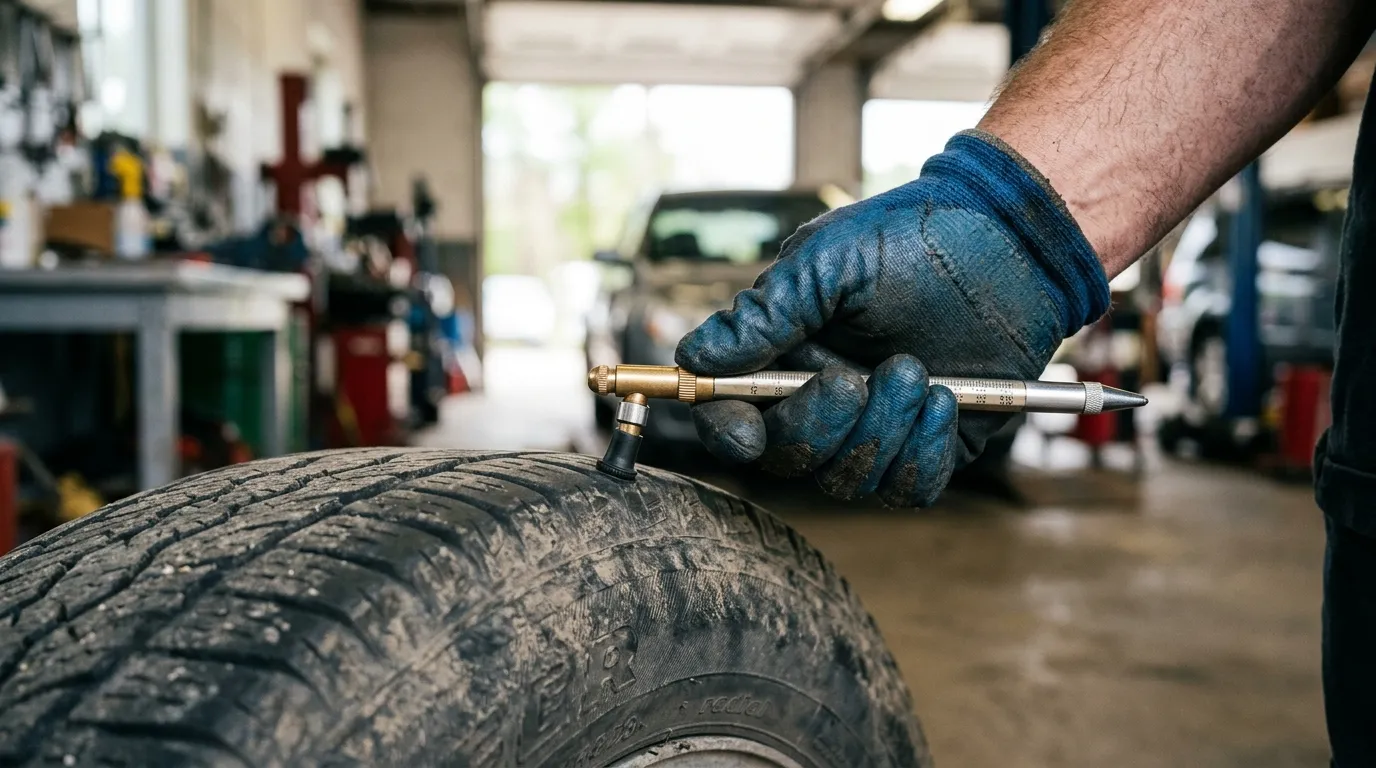
Tire pressure is the cheapest piece of car maintenance there is and one of the highest-return ones. At the right pressure a tire rolls smoothly, holds the road in a corner, and lasts longer. Underinflated, it heats up, burns more fuel and tread, wears unevenly, and can even blow out on a highway.
The good news is that checking takes a few minutes, and you can do it at the nearest station, at home with a compressor, or wherever you fill the tank.
The right pressure is not the one printed on the tire. The number on the sidewall is the maximum pressure the tire can safely hold, not what your car recommends. Follow the number your vehicle specifies.
Where to find the right pressure
The recommended pressure comes from the car maker, not the tire company. Look for the number in three places:
- On the calibration sticker on the driver’s door jamb, near the latch
- In the owner’s manual, in the specifications section
- On the fuel-filler door, on some models
The sticker usually shows front and rear pressure and, for each axle, two values: one for a lightly loaded car and one for a loaded car. Loaded usually wants more air. Snap a photo of it with your phone.
How to use a gauge
A tire pressure gauge, digital or analog, is small, cheap, and far more reliable than a guess. Take the valve cap off, press the gauge head onto the valve, and hold it straight and steady until the reading stops moving. If you hear air escaping, you didn’t seal it — press again.
Over the target? Let a little air out with the small button on the gauge. Under? Add air with a pump, then re-check with your own gauge.
Why check on a cold tire
A hot tire has expanded air, so the gauge reads higher than the real number. That’s why you check cold: in the morning before driving, or after only a few minutes on the road. A tire sitting in full sun also counts as hot.
If you can only check after a drive, wait about half an hour for the tire to cool down. A hot reading is higher than the manual’s number.
Adjust for load
Half the trick is inflating for how you actually drive. With an empty car and just the driver, use the lower value on the sticker. With five people and a full trunk, use the higher value, which usually means more air.
Rear tires often want more pressure than the fronts on many cars — the sticker spells it out per axle.
Don’t forget the spare
The spare is the most neglected tire on the car. Set its pressure along with the others even if you don’t use it every day. A spare without air is useless the moment you actually need one.
Safety and fuel
Low pressure is the worst case: the tire flexes more, heats up, wears at the shoulders, and drags fuel economy down. High pressure, on the other hand, shrinks the contact patch, hardens the ride, and wears out the center of the tread. Either way you lose safety and money.
Make it a habit
Check once a month and before any long trip. It takes about five minutes and pairs nicely with washing the car or filling up. If a tire looks low to the eye or the steering pulls to one side, check sooner than your next month.
Common mistakes
- Checking a hot tire. The reading comes out higher than real, so you run with a low tire.
- Using the number on the sidewall. That’s the maximum, not the recommendation.
- Trusting the station gauge. Always confirm with your own.
- Skipping the spare. Without air, it can’t help you when you need it.
- Setting all four to the same pressure. Front and rear can want different values.
Frequently asked questions
Where do I find the right pressure for my car?
On the sticker on the driver's door jamb, in the owner's manual, or on the fuel-filler door. The number molded into the tire sidewall is the maximum pressure the tire can hold, not what your car recommends.
Can I trust the pump at the gas station?
That gauge is used all day and often drifts out of calibration. Keep your own gauge in the car and use the station's air just to fill, then confirm with yours afterward.
Should I inflate differently when the car is fully loaded?
Yes. The sticker lists two values, one for a lightly loaded car and a higher one for a loaded one. Set the tires to the value that matches how you usually drive.
How often should I check the pressure?
About once a month and before any long trip, always on cold tires. If the car pulls to one side or a tire looks low, check sooner.
Informational content. For risky situations or technical, legal or medical doubts, talk to a professional.